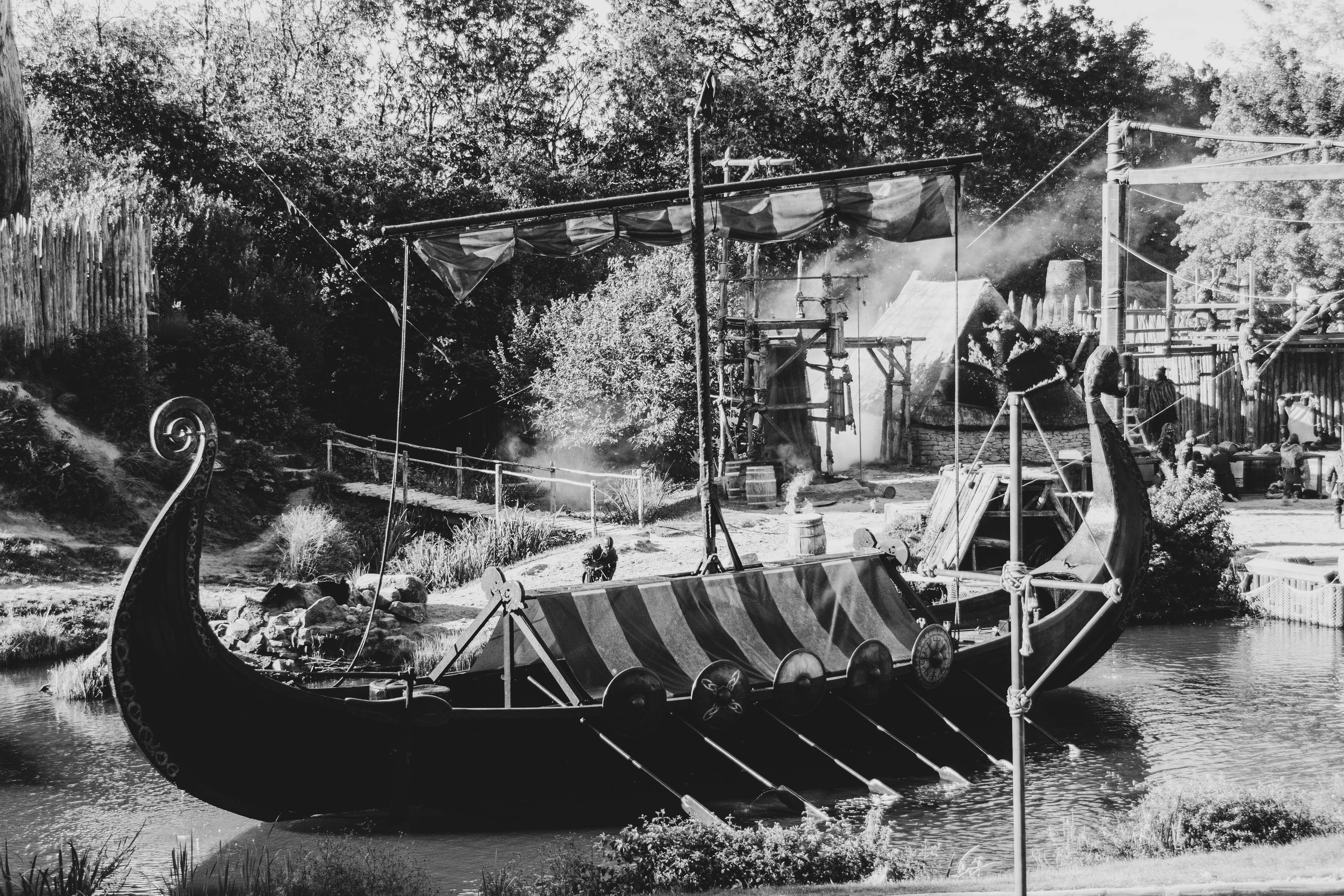
Introduction to Viking Legends
The Viking Age, spanning from the late 8th century to the early 11th century, marked a significant period in European history characterized by Scandinavian seafarers, traders, and explorers. The legends surrounding the Vikings have largely shaped modern perceptions of these complex figures, often oscillating between the archetypes of heroic pioneers and ruthless marauders. Historical sources and sagas illustrate a dichotomy: one that presents the Vikings as courageous adventurers who explored and settled new lands, while the other portrays them as brutal raiders who instilled fear in the hearts of those residing in their path.
To comprehend the legacy of Viking legends, it is essential to appreciate the intricate narratives woven through time. The sagas, written in Old Norse, serve as a primary source of inspiration, detailing both factual events and exaggerated tales. These narratives encompass themes of honor, loyalty, and valor, often highlighting the feats of legendary figures such as Ragnar Lothbrok and Eric the Red. Yet, alongside such tales of adventure, accounts of pillaging, violence, and conquest have been equally prominent, leading to the enduring image of Vikings as both heroes and villains.
The contrasting perspectives on Vikings are not merely a product of historical events but have also been influenced by factors such as cultural interactions and political agendas. In contemporary society, scholarly debates continue to explore the multifaceted nature of Viking identity. Each new discovery and interpretation adds depth to the ongoing discussion about whether these ancient mariners were pioneers of the sea, skilled in trade and exploration, or indeed, ruthless criminals intent on domination. As this blog post unfolds, we shall delve deeper into the complexity of Viking legends and explore how these narratives have evolved over the centuries.
The Vikings: Who Were They?
The term “Vikings” refers primarily to the seafaring Scandinavian warriors and traders, most notably from present-day Norway, Denmark, and Sweden, who flourished from the late 8th century to the early 11th century. These people are often depicted as fearsome marauders, but their legacy encompasses much more than that. Scandinavian geography significantly shaped Viking society; being located near the harsh northern seas instilled in them advanced seafaring skills and a deep understanding of maritime navigation.
Socially, the Vikings were structured into classes that included nobles, freemen, and thralls (or slaves). This hierarchy influenced their community dynamics, with the chieftains leading various clans, and the wealthy elite often influencing trade and exploration. Additionally, Viking society was heavily reliant on agricultural practices, which supported their populations and enabled them to pursue trade and raiding. Their economy was diverse, with a strong emphasis on craftsmanship, particularly in metalwork and shipbuilding, facilitating their ventures into distant lands.
Culturally, the Vikings are renowned for their rich mythology and epic tales detailing gods like Odin, Thor, and Freyja. Their oral traditions were foundational in shaping social values and community bonds. Seafaring advancements allowed them to undertake significant voyages across the North Atlantic, reaching as far as North America, the British Isles, and even parts of the Mediterranean. These expeditions were not solely for plunder but often for settlement and trade, illustrating their adaptability and exploration-driven mindset. Through their complex societal structure and cultural elements, the Vikings represent a civilization that was defined by exploration, trade, and a deep connection to their maritime environment.
Viking Seafaring Innovations
The Vikings, renowned for their seafaring prowess, achieved significant technological advancements that allowed them to navigate and explore vast areas of the ocean. Central to their success were the longships, which exemplified innovative shipbuilding techniques. These vessels were characterized by their sleek, elongated shapes, shallow drafts, and flexible hulls, enabling them to traverse both open seas and shallow rivers. The use of clinker-built construction, where wooden planks overlapped, provided the ships with enhanced strength and adaptability. This design was crucial in accommodating voyages of discovery and, occasionally, raids.
Moreover, the Vikings possessed impressive navigational skills that distinguished them from other seafaring cultures. They adeptly utilized various environmental indicators, such as the position of the sun, stars, and ocean currents, to chart their courses. Their profound understanding of the natural world allowed them to travel long distances with remarkable accuracy. The use of landmarks and the observation of bird flights were also integral to their navigation techniques, illustrating a solid connection to their surroundings.
The significance of the sea in Viking culture and economy cannot be overstated. The ocean served not merely as a medium for exploration and warfare but also as a vital conduit for trade. The Vikings established extensive trade networks that spanned Europe and beyond, exchanging goods such as furs, timber, and iron for silver, spices, and textiles. This flourishing maritime commerce fostered cultural exchanges and bolstered their communities economically.
Ultimately, the technological innovations and seafaring expertise of the Vikings enabled them to become efficient sailors and navigators. Their groundbreaking shipbuilding methods and navigational techniques positioned them as pioneers of maritime exploration, influencing future generations of seafarers and shaping the maritime landscape of their time.
Myths and Legends: The Heroic Viking
The rich tapestry of Viking myths and legends has significantly influenced the perception of these seafaring warriors. Central to these tales are figures like Odin, the god of wisdom, war, and death, and Thor, the god of thunder, who wields his mighty hammer, Mjölnir. These characters embody ideals of bravery, strength, and honor, which resonate deeply in the heroic narratives of the Viking Age. Throughout history, these stories were conveyed orally, passed down through generations, vividly illustrating the values and beliefs of Viking society.
Odin, often depicted as a wise and cunning figure, represents the complexities of Viking life. He is a god who sacrifices much in pursuit of knowledge, epitomizing the Viking quest for adventure and understanding. His association with both war and wisdom demonstrates a duality that has attracted admiration and intrigue, giving rise to many legends where he assists his followers in battle or seeks out forgotten truths. Similarly, Thor is celebrated for his physical prowess and protection of humanity against chaos and giants, further contributing to the heroic image of the Viking warrior on the battlefield.
The impact of these myths extends beyond the ancient world and continues to permeate modern popular culture. Films, books, and television series often portray Vikings through the lens of these legendry figures, framing them as epic heroes on thrilling quests. This portrayal often oversimplifies the multifaceted nature of Viking life, yet it plays a crucial role in sustaining their legendary status in contemporary society. As a result, the mythological narratives surrounding characters like Odin and Thor serve not only as entertaining tales but also as a means of understanding the aspirations and spirit of the Viking people, solidifying their legacy as both warriors and enduring symbols of adventure.
Viking Raids: The Dark Side of Their Pioneering Spirit
The Viking Age, spanning from the late 8th to the early 11th century, is often characterized by both exploration and brutal raids. The Vikings, originating from Scandinavia, were renowned for their seafaring skills, navigational prowess, and advanced shipbuilding techniques. However, their legacy is also marked by violent incursions into various parts of Europe, earning them a reputation as ruthless criminals. These raids were not mere acts of wanton destruction but were driven by a complex array of motivations including economic need, political ambition, and social pressures.
One of the most notable early Viking raids occurred in 793 CE at the Lindisfarne Monastery, located off the northeast coast of England. This attack is often cited as the beginning of the Viking Age. The Vikings targeted rich monastic sites, which were seen as vulnerable and offerings of considerable wealth. The success of such raids encouraged further incursions into England and beyond, leading to widespread fear and chaos among communities. Vikings not only plundered resources but also enslaved individuals, disrupted local governance, and in many cases, established settlements.
The motivations behind Viking raids were multifaceted. Economic gain was a primary driver, as their own territories struggled with overpopulation and limited resources. Similarly, political and social dynamics played a role. Leaders sought to cement their power by gaining wealth and territory through force, as successful raids elevated their status among their peers. The impact of these raids was profound, often leading to significant shifts in power structures and population movements throughout Europe.
In examining the Viking raids, it becomes evident that while they were pioneers of the sea, their actions also reflected a darker facet of their society. This duality in their legacy invites a more nuanced understanding of their historical significance, recognizing both their contributions to maritime exploration and the devastating effects of their violent incursions.
Vikings as Traders and Settlers
The image of Vikings as fierce warriors, often overshadowing their multifaceted nature, barely captures the extent of their contributions as traders and settlers. From the late eighth century onwards, the Vikings established a network of trade routes that extended across Europe, Asia, and beyond. This expansive commerce was pivotal for cultural exchanges and the evolution of modern European societies.
Vikings primarily traded commodities such as furs, amber, and iron, which they exchanged for precious goods including silver, glass, silk, and spices. Notable routes included the extensive waterways of Eastern Europe, where they navigated rivers like the Dnieper and Volga, connecting the Scandinavian homelands with the Byzantine Empire and the Islamic world. Key marketplaces emerged in towns like Birka and Hedeby, bustling with trade and interaction between various cultures. This environment fostered a rich tapestry of ideas, customs, and technologies that the Vikings would assimilate and adapt.
In addition to trade, Viking settlers established thriving communities across various regions, including the British Isles, Greenland, and North America. In areas like England and Ireland, they engaged in both trade and agriculture, settling in lands that would later become integral to the development of these nations. Their arrival not only introduced new agricultural practices but also led to hybrid cultures that showcased a blending of Norse and local traditions. Notably, the Viking influence on language, art, and governance can still be observed in the cultural landscape of these regions. The adoption of runes, improvements in shipbuilding, and even parliamentary practices reflect the profound impact of Viking settlers.
Thus, while the portrayal of Vikings often leans toward their notoriety as raiders, their legacy as traders and settlers underscores a different narrative—one that highlights commerce, cultural exchange, and the establishment of enduring communities that shaped the societal structures we recognize today.
The Legacy of the Vikings in Modern Culture
The Vikings have captivated modern audiences, appearing prominently in various forms of media that showcase their complex legacy. Films, television shows, literature, and video games often depict these Norse seafarers as both adventurous pioneers and ruthless warriors. This dual portrayal reflects a deeper societal fascination with Viking culture and a longing to connect with a past filled with myth and valor.
In recent years, television series such as “Vikings” and “The Last Kingdom” have gained popularity, providing viewers with dramatic narratives that blend historical fact and fiction. These shows not only reinvigorate interest in the Viking age but also reframe the warriors as multidimensional characters facing moral dilemmas. The Viking characters are often shown navigating complex societal hierarchies, engaging in trade, exploration, and engaging in warfare, which humanizes them beyond their traditional depiction as mere marauders.
Literature, too, has embraced the Viking ethos, with authors like Neil Gaiman and Bernard Cornwell exploring themes related to Norse mythology and Viking adventures. Such narratives contribute to an increased appreciation for their rich cultural heritage, illustrating how these ancient peoples influenced modern governance, exploration, and trade. The romanticization of Viking life resonates with contemporary audiences, often intertwining with ideals of heroism and adventure, compelling readers to reflect on themes of identity and resilience.
Furthermore, video games such as “Assassin’s Creed Valhalla” and “God of War” have enabled players to immerse themselves in Viking lore, interweaving historical events with mythological elements. These games often encourage exploration and discovery, allowing participants to engage with the Viking world actively. Such interactive portrayals reinforce the notion of Vikings as figures of fascination, highlighting not just their violent conquests but also their expansive influence on trade and exploration across Europe.
In conclusion, the portrayal of Vikings in modern culture is multifaceted. From television shows and literature to video games, the representation of these legendary figures reflects changing societal views and interests, showcasing the complexities of their legacy while encouraging a deeper exploration of the Viking age.
Karen’s Perspectives: A Debate on Viking Characterization
The characterization of Vikings has long been a contentious subject among historians and scholars. Are they primarily to be understood as intrepid explorers who significantly contributed to maritime navigation and trade, or do their actions evoke the image of ruthless criminals who instigated chaos across the regions they encountered? Both perspectives hold substantial weight, reflecting the complex nature of Viking society during the Middle Ages.
On one side of the debate, proponents of the explorers’ narrative assert that Vikings were skilled navigators and traders. They ventured far beyond their Scandinavian homelands, establishing far-reaching trade networks that extended from the British Isles to the Middle East. The Viking longships allowed them to navigate both open seas and shallow rivers, turning them into formidable seafarers. Archaeological evidence supports this viewpoint, showing that the Vikings not only raided but also settled in various locations, intermingling with local populations, which facilitated cultural exchange and economic interactions.
Conversely, an opposing view emphasizes the criminal aspects of Viking behavior. The infamous raids on monasteries and settlements, which were often brutal and violent, contribute to the perception of Vikings as marauders. Historical chronicles from the time frequently describe these incursions and portray the Vikings as barbaric, reflecting societal prejudices that arose during the height of these raids. This perspective argues that, despite their navigational expertise, it is the criminal undertakings of the Vikings that have shaped their notorious reputation in popular culture and history.
In examining these contrasting interpretations, it becomes evident that our understanding of Viking history is not static; it evolves with continuous scholarship and shifting societal contexts. New archaeological discoveries and advancements in historical methodologies constantly challenge established narratives, enabling a more nuanced understanding of Viking identity and legacy. As scholars provide deeper analyses, the Viking story becomes not just one of duality, but a rich tapestry woven from exploration, trade, conflict, and transformation.
Conclusion: The Dual Nature of Viking Legends
The complex legacy of the Vikings reveals a duality that captivates scholars and enthusiasts alike. On one hand, they are celebrated as formidable seafarers, skilled navigators of their time who charted vast oceans and established trade routes that fostered cultural exchanges across Europe and beyond. Their maritime achievements, bolstered by advanced shipbuilding technology and navigational strategies, allowed them to explore distant lands, engage in commerce, and spread their influence far beyond their Scandinavian origins.
Conversely, Viking legends also portray them as ruthless raiders, notorious for pillaging coastal settlements and sowing fear throughout Europe. These marauding expeditions, while representing only a portion of their activities, contributed significantly to the perception of Vikings as violent aggressors. This narrative, steeped in historical accounts and embellished through oral tradition, has shaped our understanding of these ancient Norse people, often overshadowing their roles as traders and explorers.
As we reflect on the dual nature of Viking legends, it becomes evident that oversimplifying their legacy fails to acknowledge the multifaceted aspects of Viking culture. This duality serves as a reminder that history is rarely black and white; rather, it consists of complex layers that warrant careful examination. In evaluating the Vikings’ contributions as pioneers of the sea alongside their actions as raiders, we foster a more nuanced perspective on their historical significance. Ultimately, these narratives not only inform our understanding of the past but also challenge us to consider how historical interpretations can evolve over time. It encourages readers to delve deeper into Viking history, exploring the intricacies that define this influential group in the annals of human civilization.