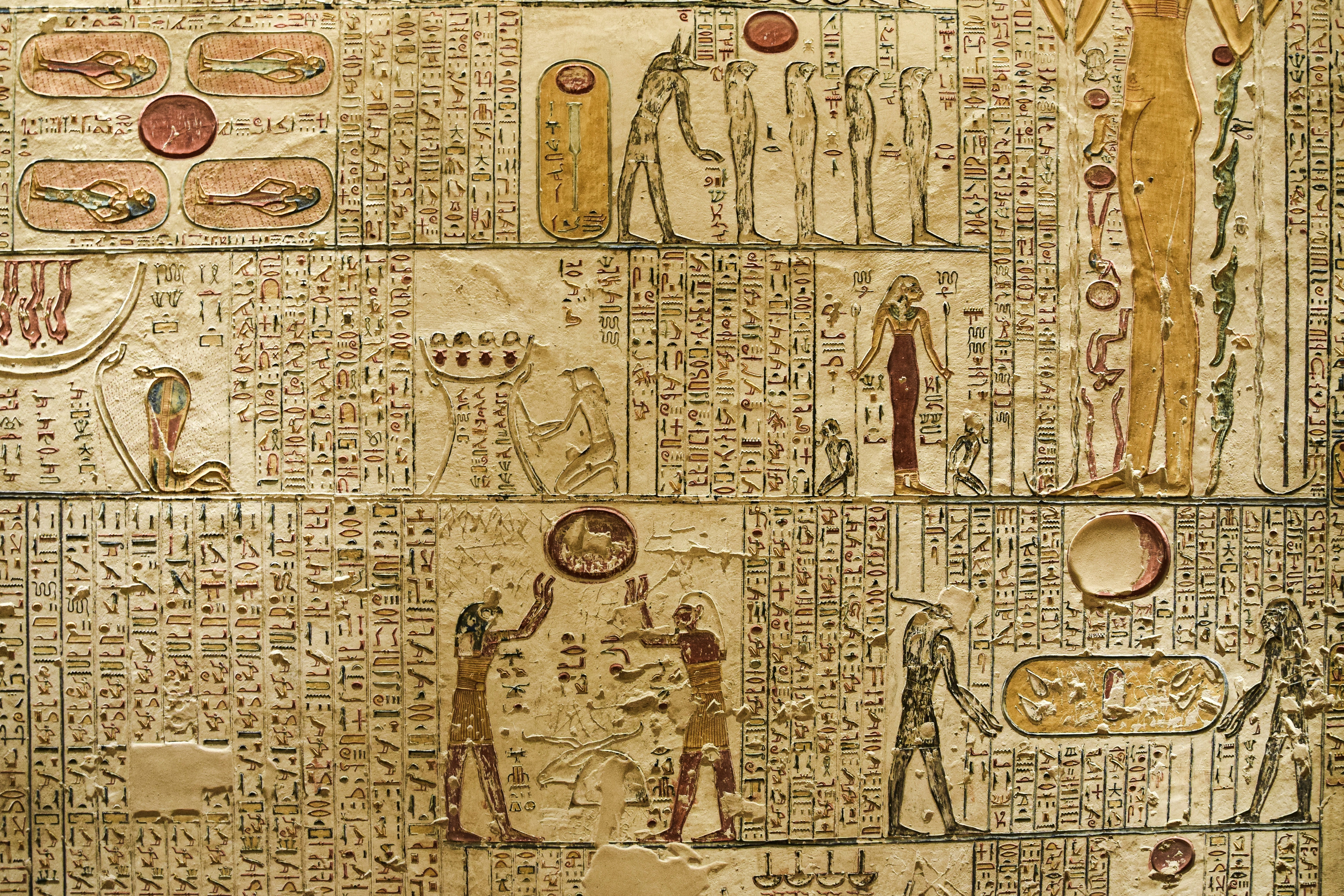
Introduction to Ancient Egyptian Mythology
Ancient Egyptian mythology comprises a rich tapestry of beliefs and practices that profoundly influenced the cultural and religious landscape of ancient Egypt. At its core, this mythology is characterized by a pantheon of gods and goddesses, each representing various aspects of life, nature, and the cosmos. The ancient Egyptians did not merely worship these deities; they perceived them as integral to their daily existence, shaping their understanding of the world around them.
The gods and goddesses of ancient Egypt, such as Ra, Osiris, and Isis, played a pivotal role in the lives of the people through a variety of myths and rituals. These narratives not only explained natural phenomena—such as the flooding of the Nile or the cycle of day and night—but also imparted moral lessons and underscored the values of ancient Egyptian society. Central to these beliefs was the concept of ma’at, which represented order, justice, and harmony, indicating that the divine had a direct influence on social and cosmic balance.
Rituals and temple worship were significant components of ancient Egyptian spirituality, with elaborate ceremonies conducted to honor the gods and seek their favor. Temples were not merely places of worship; they functioned as economic centers and were intricately tied to the governance of society. Pharaohs were often viewed as intermediaries between the gods and the people, reinforcing the belief that an effective ruler maintained harmony through divine support.
In exploring the top ten powerful gods in ancient Egypt, one gains a deeper understanding of how these deities distinguished themselves in various domains, including the afterlife, nature, and governance. Their influence is evident in the monumental architecture, literature, and art that has survived through centuries, underscoring the profound impact of these beings on ancient Egyptian civilization.
Ra – The Sun God
Ra, often revered as the preeminent solar deity in ancient Egyptian mythology, holds a significant position among the pantheon of Egyptian gods. Known as the Sun God, Ra represents light, warmth, and growth, embodying the life-giving force of the sun. His importance cannot be overstated, as he was believed to be the creator who emerged from the primordial waters of chaos, bringing forth the world and its inhabitants. This narrative reinforces his status not only as a deity but also as a king among gods.
The symbolism associated with Ra is profound. Typically depicted with a falcon head crowned with a solar disk, he personified the sun’s rays and the cycle of day and night. In various mythological tales, Ra traveled through the sky during the day, providing illumination, and descended into the underworld at night, symbolizing death and rebirth. This duality illustrates the ancient Egyptians’ understanding of life cycles and their reliance on the sun’s movements. Moreover, Ra’s association with kingship established him as a vital figure in the ancient Egyptian conception of governance; pharaohs were often seen as his earthly representatives, tasked with maintaining order and harmony.
The worship of Ra extended throughout ancient Egyptian history, with significant temples constructed in his honor. One of the most notable is the Temple of Karnak, which served as a major center for Ra’s worship. This temple complex showcased grand architecture and intricate carvings celebrating his divine nature. Rituals and festivals dedicated to Ra were common, illustrating the centrality of this deity in both religious practices and daily life. Moreover, the concept of the sun god’s rejuvenation each morning offered hope and a sense of permanence to the ancient Egyptians, reinforcing the belief in cyclical renewal and eternal life.
Osiris – God of the Afterlife
Osiris stands as one of the most significant deities in ancient Egyptian mythology, revered as the god of the afterlife and resurrection. He embodies the concepts of rebirth and eternal life, reflecting the ancient Egyptians’ deep spiritual beliefs about life after death. Osiris’ narrative begins with his tragic demise at the hands of his brother Set, who represents chaos and disorder. Set’s jealousy led to the murder of Osiris and his dismemberment, scattering his body across the land. However, Osiris’ devoted wife, Isis, searched tirelessly for the pieces of her husband, ultimately reassembling his body. This act of love and devotion enabled Osiris to be resurrected, symbolizing hope and the promise of life after death.
The myth of Osiris not only underscores the idea of resurrection but also establishes him as a primary figure in the Egyptian belief system regarding the afterlife. Upon his resurrection, Osiris became the ruler of the Underworld, also known as Duat. He presided over the judgments of the deceased, determining their fate in the afterlife. His myth influenced various burial practices, as ancient Egyptians believed that merging their lives with Osiris through proper rituals and funerary customs could grant them eternal life. Burial practices included the careful mummification of bodies, the construction of elaborate tombs, and the inclusion of grave goods, all intended to ensure a safe passage to the afterlife.
Osiris’ significance is further evidenced by his association with agricultural cycles, representing life, death, and rebirth reminiscent of the annual flooding of the Nile river, which brought fertility to the land. This connection further solidified his status as a symbol of regeneration and continuity, making him an essential figure in both religious and cultural practices in ancient Egypt. In conclusion, Osiris remains an enduring symbol of the ancient Egyptian understanding of life, death, and resurrection, illustrating profound spiritual beliefs that have transcended time.
Isis – The Mother Goddess
Isis is revered as one of the most significant deities in ancient Egyptian mythology, known primarily as the mother goddess and a symbol of motherhood and fertility. Her attributes encompass magic, healing, and protection, making her an essential figure for those in need of support and solace. As a goddess who embodies compassion and nurturing, Isis is often portrayed as a devoted mother, caring for her son Horus after the tragic death of her husband, Osiris. This aspect of her character illustrates the deep associations ancient Egyptians held between motherhood and divine protection.
Mythologically, Isis played a crucial role in the resurrection of Osiris, who was murdered by his brother Set. Utilizing her knowledge of magic, she managed to bring him back to life, thereby maintaining the balance in the struggle between good and evil. This act not only solidified her status as a powerful goddess but also established the theme of resurrection and renewal, which resonated deeply with ancient Egyptian beliefs about the afterlife. Isis and Osiris’s relationship symbolizes the enduring bond between husband and wife, as well as the cyclical nature of life and death.
The worship of Isis extended far beyond the geographical confines of Egypt, reflecting her significance across various cultures. Her influence permeated through the Hellenistic period and into the Roman Empire, where she was venerated as a universal mother and a protector of the marginalized. Artifacts, temples, and inscriptions dedicated to Isis have been uncovered in diverse locations, demonstrating her widespread appeal and reverence. Today, while her worship may not be practiced in the same manner, Isis remains a compelling figure in modern spirituality and cultural discussions, symbolizing empowerment and resilience.
Horus – The Falcon God
Horus stands as one of the most significant deities in ancient Egyptian mythology, embodying the concepts of the sky, kingship, and protection. Often depicted as a falcon or as a falcon-headed man, Horus symbolizes the duality of the gods and the intertwining of divinity with earthly governance. His importance rests not only in his celestial attributes but also in his critical role as the protector of the pharaoh, representing the ruling authority of Egypt.
The mythology surrounding Horus is marked by his fierce battles against Seth, the god of chaos and disorder. According to ancient texts, Seth killed Horus’s father, Osiris, which led to a protracted struggle between the two deities. Horus’s quest for vengeance and justice culminated in a series of fierce confrontations, symbolizing the eternal struggle between order and chaos, and good and evil in the universe. His triumph over Seth not only avenged his father’s death but also established Horus as the rightful ruler and protector of Egypt.
Horus’s right to rule was further reinforced by the concept of divine kingship, which intertwined the fate of the pharaoh with that of the god. The pharaoh was often referred to as the “Living Horus,” indicating the belief that he embodied the god’s essence and power. This links Horus directly to the political and spiritual realm, reinforcing his significance as a guardian of the nation’s stability and prosperity. The mythology associated with Horus profoundly impacted Egyptian culture, influencing art, religion, and governance, thereby establishing him as a pivotal figure in the Pantheon of ancient Egyptian gods.
5. Anubis – The God of Mummification
Anubis occupies a significant role in the pantheon of Ancient Egyptian deities, primarily viewed as the god of mummification and the afterlife. His unique responsibilities include overseeing the embalming processes and guiding souls through their journey to the afterlife. Anubis’s important functions are rooted in the ancient Egyptian belief system that emphasized the necessity of proper burial and preservation of the body to ensure a successful transition to the next life.
The jackal is a prominent symbol associated with Anubis, which embodies his protective qualities and connection to funerary practices. Jackals were often found in cemeteries, scavenging on decaying remains; subsequently, the ancient Egyptians linked this characteristic with the god’s role in safeguarding the dead. By integrating the imagery of the jackal into his depictions, Anubis reinforced the cultural beliefs regarding death and the importance of protecting the integrity of the deceased.
Anubis’s representation in tombs and artifacts is plentiful, often portrayed as a human figure with a jackal head, draped in ceremonial garments. In tomb paintings and sculptures, Anubis is frequently depicted overseeing the mummification process, serving as a guardian who ensures that the rituals are performed according to sacred traditions. This visual presence underscores the reverence attributed to him, as Egyptians sought his favor in their quest for immortality.
His influence is evident not only in funerary rituals but also in the broader context of ancient beliefs regarding death and the afterlife. Anubis’s guidance was integral as souls were believed to navigate a perilous journey after death. Through his divine oversight, the ancient Egyptian culture was able to establish a framework for understanding life after death—a foundational aspect of their religious practices that endures in historical significance. In conclusion, Anubis remains a powerful symbol within ancient Egyptian mythology, embodying the intricate relationship between death, mummification, and the eternal soul.
Thoth – The God of Wisdom and Writing
Thoth, the ancient Egyptian deity revered as the god of wisdom, writing, and knowledge, occupies a unique position in the pantheon of gods. Often depicted with the head of an ibis or as a baboon, Thoth is synonymous with intelligence and intellect. His esteemed role as the scribe of the gods underscores his significance within Egyptian mythology, where he not only records the deeds of both gods and humans but also serves as a mediator in various cosmic events.
One of Thoth’s most notable contributions to Egyptian culture is the invention of hieroglyphs. This writing system utilized pictorial symbols to convey information, marking a monumental advancement in record-keeping, religious texts, and communication within ancient Egyptian society. His authorship extended beyond mere documentation; Thoth was credited with composing sacred texts, hymns, and magical spells that were integral to the spiritual fabric of Egypt. Consequently, he established a profound link between divine wisdom and the written word.
Thoth’s association with the moon further enhances his significance in ancient Egyptian cosmology, as he symbolizes the cycles of time, regeneration, and knowledge. This lunar connection is illustrated through myths that portray him as responsible for the calculation of time and the measurement of the calendar. His wisdom was often sought in matters of justice, as Thoth frequently intervened in disputes between other deities, serving as an impartial judge.
Thoth’s relationships with deities such as Ma’at, the goddess of truth and order, reflect the inherent balance of wisdom and morality in Egyptian thought. Additionally, his interactions with deities like Ra and Osiris highlight his role in the creation and maintenance of the universe. Through various mythological tales, Thoth’s presence is felt as a custodian of knowledge and a harbinger of enlightenment, solidifying his legacy as one of the most powerful gods in ancient Egypt.
7. Set – The God of Chaos
Set, often referred to as the god of chaos, storms, and the desert, occupies a complex and crucial position within ancient Egyptian mythology. As one of the principal deities, he embodies the chaotic elements that serve to balance the more ordered aspects of existence. His role as an antagonist is prominently displayed in the narratives surrounding his brother, Osiris, and his nephew, Horus. Set’s actions towards Osiris, including his notorious murder, illustrate the themes of conflict and duality that permeate Egyptian mythology.
The dichotomy represented by Set’s character is noteworthy; he is seen as both a destroyer and a necessary force that contributes to the natural order of the universe. This duality is reflected in his associations with the desert, which can both nourish life and bring devastation. Set’s storms embody unpredictability, serving as reminders of the unpredictable nature of life itself. In this sense, he represents not only chaos but also the challenges that propel the cyclical nature of existence.
In the mythological struggle against Horus, Set takes the role of the adversarial figure, which serves to elevate the concepts of justice and rightful rule. His conflicts with Horus are emblematic of the broader cosmic battle between order and chaos, reflecting deeply seated psychological and philosophical themes. The eternal struggle between these two figures is often interpreted as an allegory for the balance that is required to maintain harmony within the world. Set, as the god of chaos, reminds devotees that chaos and order must coexist, creating a fluid and dynamic universe.
Ultimately, Set’s legacy within ancient Egypt is one of complexity, focusing on the necessity of chaos in achieving balance. His character invites contemplation of how opposing forces interact, highlighting that chaos, while often viewed negatively, plays an essential role in the fabric of existence.
Hathor – The Goddess of Love and Joy
Hathor, one of the most revered deities in ancient Egyptian mythology, embodies a unique duality throughout her representations and worship. Regarded primarily as the goddess of love, joy, music, and motherhood, Hathor’s influence permeated various facets of life in ancient Egypt. Her nurturing qualities established her as a beloved figure, but she also exhibited a fierce side, commanding respect and admiration. This duality allowed her to resonate with diverse groups within society, cementing her importance as both a comforting protector and a formidable goddess.
Music and dance are central to Hathor’s identity. She is often depicted with musical instruments, such as the sistrum, symbolizing the joyful and celebratory aspects of her nature. Festivals dedicated to Hathor provided a space for communal gatherings, filled with music and dance, reflecting her profound association with creativity and happiness. These celebrations not only honored her but also served as a reminder of the fundamental values of joy and love that were pivotal to ancient Egyptian culture.
In addition to her joyous aspects, Hathor held a significant role in the realm of motherhood and childbirth. As a protector of women during labor, she was often invoked for assistance and guidance, embodying the protective spirit required during one of life’s most critical phases. Her attitude towards women was multifaceted; she was a nurturing presence, yet her fierce attribute ensured that she was seen as a guardian against threats during childbirth. The respect afforded to her underscores the social implications of her dual nature, highlighting the importance of women’s roles and the recognition of their strength in ancient society.
In conclusion, Hathor’s distinct characteristics as the goddess of love and joy illustrate her crucial role in ancient Egyptian worship. Her dual nature as a nurturing protector and formidable deity underscores the complexities of human experience, marking her as a deity that remained significant in the hearts and minds of the people.
Amun – The King of the Gods
Amun, one of the most significant deities in ancient Egypt, rose to prominence as the king of the gods, symbolizing divine authority and power. His worship began in Thebes, where he was initially associated with the local sun god, Amun was exalted by the people and became the central figure of the Theban triad, which included his consort Mut and their son Khonsu. The Temple of Karnak, one of the largest religious complexes in the world, became the epicenter of Amun’s worship, hosting elaborate rituals and offerings that centered around this powerful god.
Amun’s ascendancy is closely linked to the political fortunes of Thebes, especially during the New Kingdom (c. 1550–1070 BCE). As the pharaohs expanded their territories and influence, they increasingly adopted Amun as their patron god, intertwining his power with their own. The pharaohs, often considered divine themselves, emphasized their connection to Amun, which strengthened their rule and legitimacy in the eyes of their subjects. This symbiotic relationship between Amun and the pharaohs shaped both the political and spiritual landscape of ancient Egypt.
The blending of Amun and Ra, the sun god, created an even more powerful identity known as Amun-Ra. This fusion marked a significant turning point, as it combined Amun’s attributes of mystery and hidden strength with Ra’s undeniable solar authority. Amun-Ra became a universal god, respected not only in Thebes but across the entire Egyptian civilization, and his cult extended into other regions. His image was venerated in numerous temples and inscriptions, solidifying his role as a central figure in the ancient Egyptian pantheon and ensuring his legacy as the king of all gods.
Conclusion: The Legacy of Egyptian Deities
Ancient Egyptian deities have left a profound legacy on religion, art, and culture that resonates even in contemporary society. The ten powerful gods discussed throughout this blog post exemplify the rich tapestry of mythology that shaped the lives and beliefs of Egyptians for millennia. These gods were not mere figures in ancient texts; they embodied natural elements, human emotions, and societal values, providing a framework through which the ancient people understood their world. Deities such as Ra, Osiris, and Isis were central to the spiritual lives of individuals and communities, with their worship often involving elaborate rituals and ceremonies designed to ensure harmony and favor from the divine.
The myths surrounding these gods continue to inspire literature and art, influencing myriad creative expressions that traverse cultures and epochs. The narratives not only speak to the values and metaphysical beliefs of ancient Egyptians but have also emerged as rich sources of inspiration for modern creators. Festivals, ceremonies, and traditions that originated in ancient times have evolved, often retaining their essence, thereby perpetuating a connection to the past.
Moreover, the enduring fascination with ancient Egyptian mythology highlights the significance of preserving this rich cultural heritage. As scholars and enthusiasts alike explore the complexities of these gods, modern spirituality has found ways to incorporate them into various practices, thereby breathing new life into their ancient stories. Initiatives aimed at safeguarding sites, artifacts, and knowledge are critical in ensuring that the wisdom of these deities remains accessible to future generations. Ultimately, the impact of Egyptian deities extends far beyond ancient history, continuing to shape contemporary thought and artistry in ways that affirm their relevance today.